Most people buy their first yoga block set after a teacher tells them to bring two blocks, then end up comparing cheap foam bricks with cork ones that cost several times more. The decision is simpler than it looks. A good yoga block set comes down to three questions: how firm the blocks should be, what size suits your body, and whether a strap in the box is something you will actually use. The sections below take those in turn and finish with a few checks you can run before you pay.
Why two blocks beat one
A block shortens the distance between you and the floor. One 2026 beginner guide estimates that gap at roughly 2 to 6 inches in poses like triangle and seated forward fold. That range is worth remembering, because it tells you how much height you need to make up, and it is rarely the same on both sides of your body.
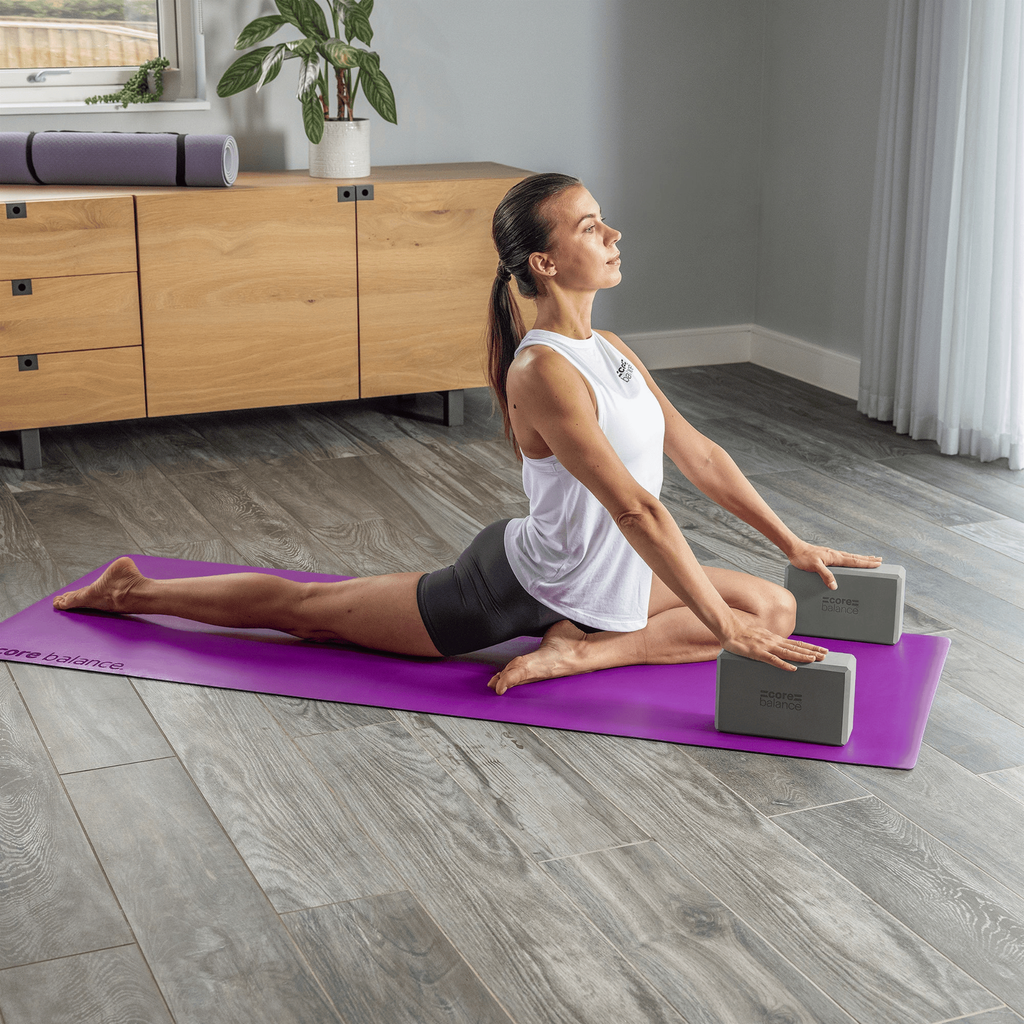
Take a wide-legged forward fold. With one block you lean toward it and your hips twist off center. With two, you can match your hand heights and keep your spine level. That symmetry is the practical reason to buy a yoga block set instead of a single block, and it is why teachers ask for a pair.
Cork or foam
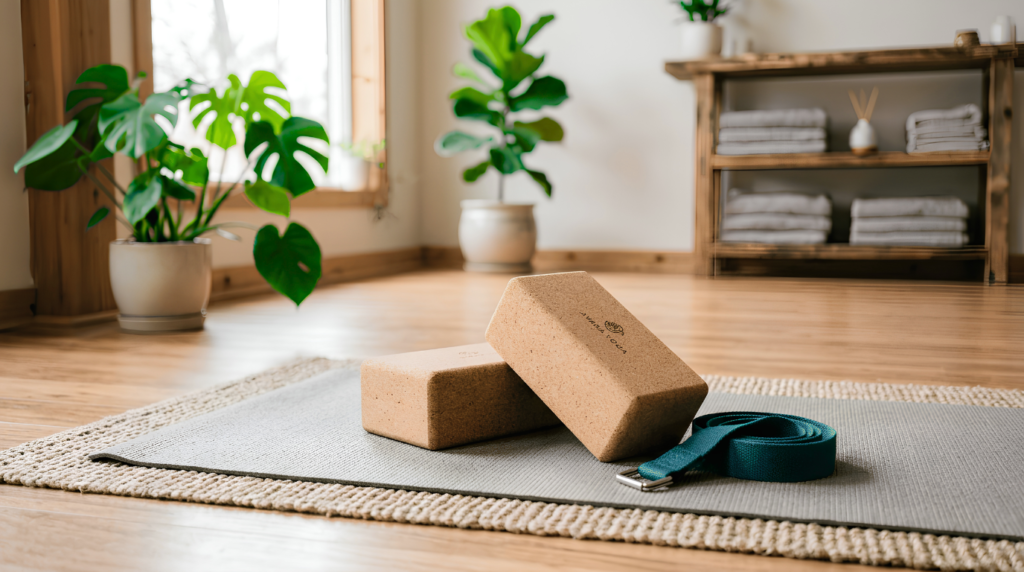
Cork is the firmer, heavier option. Retailers and reviewers describe it as slip-resistant even during sweaty classes. EVA foam is lighter, usually 150 to 300 grams, with a closed-cell surface that wipes clean. One cork listing gives 2.3 pounds per block, which you will notice when carrying a pair to class.
Foam’s weak point is density. Low-density foam can buckle or compress unevenly under heavy loads, so a soft block makes a poor base for stacking or leaning your weight. Cork’s weak points are price and weight. There is also an environmental trade-off, since EVA is petroleum-derived, while cork comes from oak bark.
A sensible way to decide is by practice style. If your classes are gentle or restorative, a foam yoga block set is cheap and forgiving. If you balance, stack blocks or sweat heavily, cork earns its higher price. One yoga teacher’s comparison suggests starting with foam and upgrading once you feel more confident. That is low risk, because a foam pair costs little and still gets used later for stacking under a bolster or as a travel set. When you do upgrade, a cork yoga block set is the natural step.
Size and thickness
Most blocks share a 9 by 6 inch footprint, and thickness is where they differ. A popular strap bundle lists two cork blocks at 9 by 6 by 4 inches, while many budget foam sets use 9 by 6 by 3 inches.
That one inch changes your options. A 4 inch block gives you three heights: 4, 6 and 9 inches, depending on which face it rests on. A 3 inch block gives 3, 6 and 9. If the gap between your fingertips and the floor is about 4 inches in triangle pose, a thicker block fits on its lowest setting, while a thinner one forces you up to the 6 inch face and may lift you more than you need.
A word of caution on stacking. A block standing on its narrowest edge is at its least stable, so save that position for a non-slip floor and a firm block. Mini blocks and wrist-support designs exist, and they suit specific needs. For most beginners the standard 9 by 6 by 4 inch yoga block set is the safer first purchase, because it matches what most classes and tutorials assume.
Is a yoga block set with a strap worth it?
It depends on why you are buying. If tight hamstrings or shoulders are the reason you started, a strap helps you reach your foot in a seated forward fold without rounding your back. Bundles such as the Syntus listing include an 8 foot strap with a metal D-ring, and the metal ring is worth checking for, since plastic buckles tend to be the first part to fail.
If you already own a strap, or know you only want blocks, skip the bundle. Whichever yoga block set you choose, compare the price of the bundle against buying the parts separately, and confirm the strap length suits your height.
Checks to run before you buy
Product photos tell you little. Press a thumbnail into a foam block: a deep dent that recovers slowly suggests low density. Stack two blocks and press down with both hands to see whether they wobble or squash. Look closely at the edges, because sharp corners feel harsh under the hand.
Recent foam block guides mention complaints about flaking, odor and long-term compression, so search the reviews for those words rather than relying on the star rating. Also confirm the exact dimensions in the listing and check the return policy. A yoga block set that arrives smelling strongly of chemicals or marked with dents is worth sending back.
Three ways to use your blocks in the first month
In triangle pose, place the bottom hand on the block at the tallest height that still lets your chest rotate open, rather than collapsing toward the floor. In chair pose, squeeze a block between your thighs to teach your inner legs to engage. For a supported bridge, lie on your back and rest your sacrum on a block set to its lowest height. If you feel any pinching in your lower back, remove it and ask your teacher or a physical therapist. One yoga block set covers all three, which is another point in favor of a pair.
Care and storage
Wipe foam with a damp cloth and mild soap. Cork prefers a light wipe rather than soaking, and both materials should stay away from radiators and direct sun, which can warp them. Check the maker’s instructions, since finishes vary. Your yoga block set will last longer if you store it flat instead of leaving it wedged in a gym bag.
Pick a pair, choose the thickness that matches your floor gap, and upgrade the material only when your practice asks for it. A yoga block set chosen for how you actually practice will outlast one chosen on price alone.