Most advice about finger training comes from coaches and forum threads, and the two often disagree. The studies are a better starting point, and they are less rigid than the old rule of hanging heavy and resting long. Below is what the evidence shows, how to turn it into a plan, and when it makes sense to stay off the hangboard.
Why Repeatability Is the Whole Point
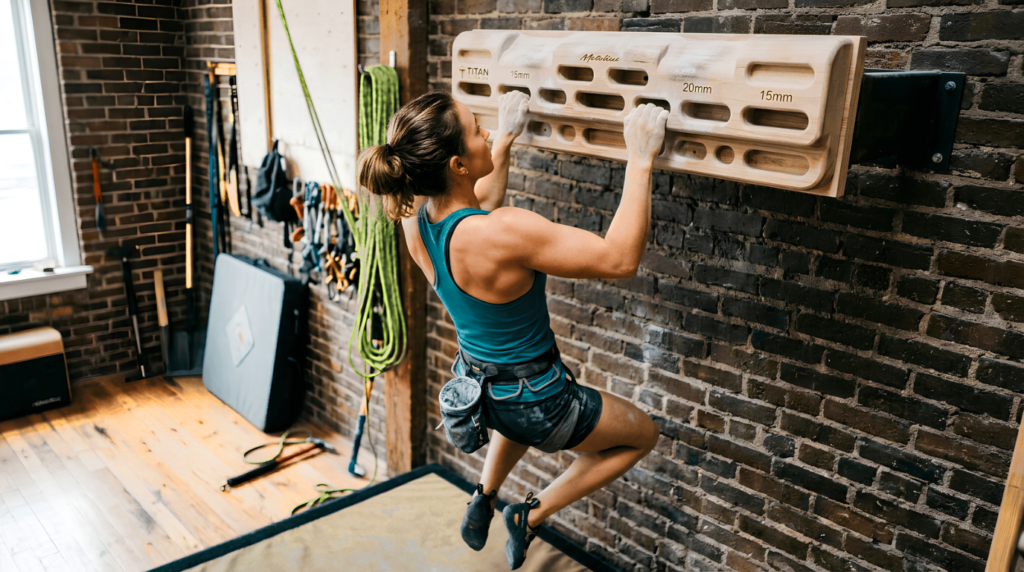
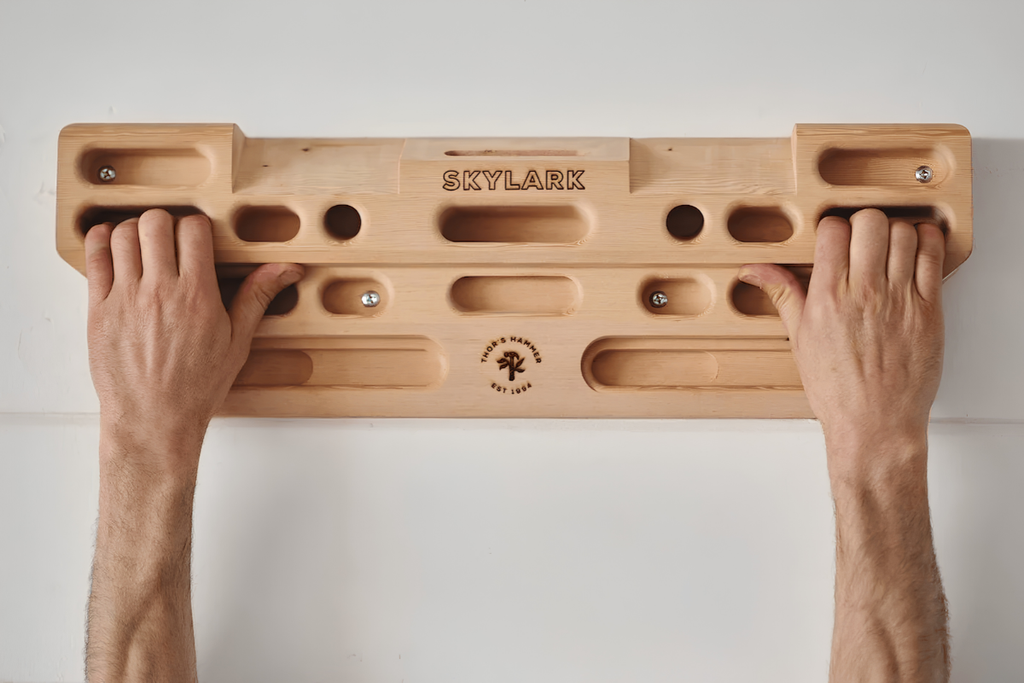
A hangboard is a fixed board with edges and pockets of different depths. Fingerboard and training board are other names for the same tool. On a wall, hold size, angle and body position change on every move, so it is hard to tell whether you got stronger or just found better footwork. On the board you can repeat the same edge and the same load next month and compare. That repeatability is what makes a hangboard useful for training rather than just hanging around.
Heavy, Light or Both? Reading the Studies Carefully
The best-known hangboard research comes from Eva Lopez-Rivera. In one comparison of 26 climbers averaging about 5.13a/b, a low volume, maximum weight protocol was the most effective at raising finger flexor strength. Her work also suggests that climbers who start with lower finger strength tend to gain more from maximal strength training, so the same protocol may do less for someone who is already strong.
A 2022 study in Frontiers in Sports and Active Living tested 54 experienced climbers on a 12 mm edge, twice a week for four weeks. Strength improved at 100 and 80 percent of maximum but not at 60 percent, while stamina and endurance improved at 80 and 60 percent but not at 100. Heavier loads built strength, lighter ones built resistance to fatigue, and 80 percent did a little of both.
Then there is the 2024 paper in Sports Medicine Open. Frequent low intensity loading was as effective for grip strength as maximal loads, and combining the two added further gains. Read it with some care, though. It was a retrospective look at climbers who logged their own training in an app, not a controlled trial, and people who log sessions diligently may differ from those who don’t. It is a promising signal, not a verdict.
Turning the Evidence Into a Plan
Pick one hangboard method and give it four to six weeks. That window is common coaching practice rather than a tested rule, so treat it as a sensible trial period. For max hangs, one summary of the research describes three to five sets of ten second maximal hangs with three minutes of rest. Lighter loading means longer, gentler sessions that are easier on tired fingers.
Here is how that might look in practice. A climber who uses a hangboard three evenings a week and arrives with sore fingers may absorb the lighter style more easily. Someone who climbs twice a week and recovers well has more room for heavy hangs. Neither approach is proven better for everyone. This is reasoning from the studies, not a prescription.
Whichever you choose, end each hang a few seconds before failure, and do them early in the session. One beginner guide recommends being well rested, preferably after a rest day and right after the warm-up. A hangboard session on already tired fingers is where sloppy form and injuries tend to creep in.
Who Should Use a Hangboard, and Who Should Wait
Advice here is contested. One gym guide notes that some say you should climb regularly for at least two years before hanging on a fingerboard, while Training Beta generally recommends climbing at least V3 first, with a pulley taking weight off on a deep edge. Both are rules of thumb, not tested cutoffs, and grades differ between gyms, so use them as a rough guide.
The injury data is less alarming than the forums suggest. A review of finger pain found no significant difference between climbers who hangboard and those who don’t, apart from men climbing 7a or harder with under six years of experience. That group is the cautionary tale: strong enough to load their fingers hard, not yet adapted to it. Full crimping on a board is not advised because of the injury risk. Stop at sharp pain, and see a physiotherapist or doctor if a finger injury lingers.
Choosing a Board and Tracking What Happens
Hangboard roundups keep naming the same boards, such as the Beastmaker 2000, the Trango Rock Prodigy and the Metolius Project Training Board, and many of those lists are affiliate driven. A better question than “which is best” is “which edges will I actually use?” The Rock Prodigy offers 36 grip positions, but most people spend months on one or two. Snowleader warns that beginners often choose a model that is too technical. A simple hangboard with a sensible range of edge depths and a secure mount is enough.
Then keep a log. Write down edge size, grip, added weight, hang time and how your fingers felt the next day. The 2024 study depended on exactly this kind of app logging, and the habit tells you whether the plan is working before your fingers tell you the hard way. A hangboard only measures progress if you record every session.