Pool workouts have a reputation for being gentle, and sometimes for being too easy to matter. The research is more interesting than that. A 2025 meta-analysis in Frontiers in Public Health pooled randomized trials of aquatic exercise in healthy older adults and found a moderate gain in muscle strength, with an effect size of 0.56. One caveat belongs up front. That review looked at aquatic exercise as a whole, not at aqua dumbbells specifically. So this guide separates what the studies show from what is a sensible reading of how the equipment works.
How Aqua Dumbbells Create Resistance in the Pool
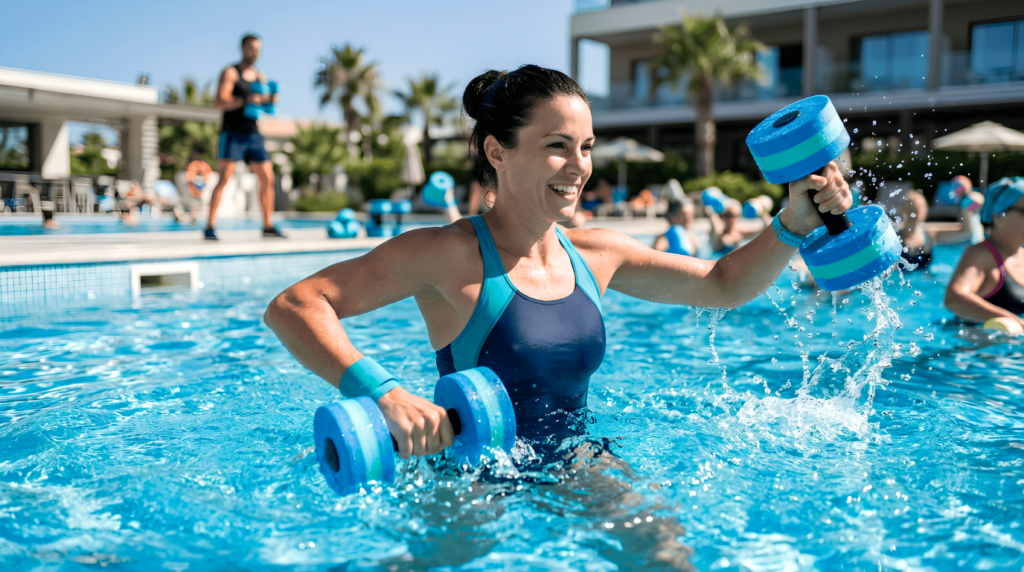
Aqua dumbbells are foam handles that float, so the work begins when you push them below the surface. A land dumbbell relies on gravity. A foam one relies on buoyancy, and that changes how you should use it.
Because the foam rises on its own, the return phase is assisted. A common beginner habit is letting the bells shoot back up, which wastes half the exercise. Guide them up slowly and you get far more out of each repetition.
Water also drags against anything moving through it, and drag grows as you move faster. That makes speed your main adjustment. A slow press feels mild and a quick one feels much harder, with no change of equipment. Bell size matters as well. SwimOutlet notes that smaller buoys suit beginners, while larger ones suit people who want a harder workout.
What the Studies Do and Do Not Show
The meta-analysis found that strength gains followed a non-linear dose response, so more is not automatically better. It also noted that resistance equipment may help regulate load in older adults. That is the closest the evidence comes to supporting aqua dumbbells, and it is indirect.
Smaller trials add context. In an eight-week study, women aged 65 and over trained for 60 minutes, three times a week, and both the pool group and the land group improved on strength, balance, agility and aerobic capacity compared with a control group. The land group lost more weight, and the authors suggested the pool may suit people with joint or balance limits. Only 33 of 45 participants finished, so treat the results as a signal, not a verdict.
A 16-week trial found that power training in water improved strength and quality of life, while moderate-paced land training did more for body fat. None of these sources isolates foam dumbbells from other pool resistance methods, so claims that aqua dumbbells beat any other method remain unproven.
Who Gets the Most Out of Them
Picture someone whose knees complain after land workouts. A pool session lets them train the shoulders, chest, back and trunk without the pounding of a gym floor. That is where this tool makes the most sense.
People who already lift may find it a useful low-impact day between heavier sessions. It should not replace heavy lifting. If your goal is maximal strength or the fastest fat loss, the trials above lean toward land training, so use the pool as a complement.
A Beginner Session You Can Try
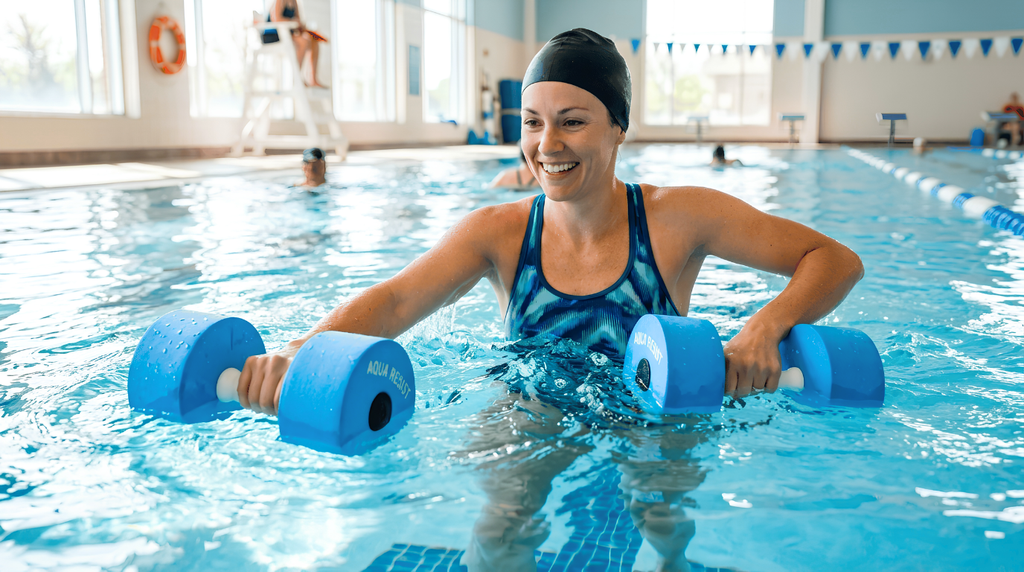
Stand in chest-deep water with your feet shoulder-width apart and your abdominal muscles lightly braced. Spend five minutes marching and making easy arm circles. Then hold your aqua dumbbells with a relaxed grip and work through three moves: slow presses down toward your thighs, wide sweeps out to the sides and back together, and alternating forward punches.
Do each move for 30 to 40 seconds, rest briefly, and repeat for three rounds. Fill the rests with bodyweight work such as jogging in place so your hands can recover. In the first two weeks, move slowly and focus on control. By week three, raise your speed before you think about bigger bells. The eight-week trial above used three supervised sessions a week, but two is a reasonable starting point for most people.
Mistakes That Waste the Effort
Arms that break the surface stop meeting resistance, so keep the bells and forearms submerged. Squeezing the handles hard tires your grip before your shoulders get any benefit. Water that is too shallow limits your range, and water that is too deep without a flotation belt turns the session into a balance task. If a shoulder pinches or aches, stop and ask a physiotherapist before continuing.
Buying and Looking After a Pair
When shopping for aqua dumbbells, comfort matters more than anything printed on the packaging. Check that the grip suits your hand and the foam feels dense and undamaged. Many pools lend equipment during classes, so try a pair there before buying aqua dumbbells of your own.
For care, one manufacturer advises rinsing with fresh water after use, air drying, and storing out of direct sunlight. Follow whatever guidance comes with your pair.
Questions People Ask
Are they worth trying as a beginner?
For most healthy adults, yes. They offer a low-risk way to experience water resistance, but expect steady gains, not dramatic ones.
How often should I use them?
Two to three sessions a week suits most people, with at least a day between sessions while your shoulders adapt.
Shallow or deep water?
Chest-deep water is the simplest place to start, since you can stand and control your movements.
Anyone with a heart condition, recent surgery or an injury should check with a doctor first, because aqua dumbbells are an exercise tool, not a treatment.