Two people can sit on the same seated row machine, pull the same weight, and end up training different muscles. The difference usually comes down to where the elbows travel and how the hands hold the handles. That is worth knowing whether you are planning a back day or deciding which seated row machine deserves a spot in your home gym.
What the Research Says About Elbow Angle and Grip
A 2023 study in the International Journal of Strength and Conditioning is the clearest evidence on this. Eleven men and ten women, all recreationally trained, performed seated cable rows with overhand, underhand and neutral grips, and with the shoulders abducted to 30, 60 and 90 degrees. Abduction simply describes how far the elbows flare away from the torso.
The pattern was consistent. Upper and middle trapezius and rear deltoid activity climbed as the elbows moved out to 60 and 90 degrees, while lat activity was highest when the arms stayed closer to the body. Biceps activity was higher with underhand and neutral grips than with overhand.
Two caveats matter. The study used cables, not a plate loaded or selectorized seated row machine, and the group was small. Also, higher muscle activation on EMG does not automatically mean more muscle growth. Treat the results as a sensible guide, not a law.
Turning the Findings Into a Plan
If lat development is your priority, keep the elbows closer to your sides and use a neutral grip. If you want more upper back and rear deltoid work, let the elbows flare and pull toward the chest. Underhand grips work, but your biceps will probably tire first, which can end a set before your back has done its share.
One idea, and it is my suggestion rather than something the study tested, is to use the tucked version early in the week and the flared version later. Switching between them on one seated row machine is easy if the handles offer more than one grip, and it spreads the work across the whole back instead of favoring one area.
For a first session, try three sets of ten with a load that leaves you two clean reps in reserve. That is a general training convention, not a finding from the research above, so adjust it to your own experience.
Chest Pad or Cable: Choosing a Seated Row Machine
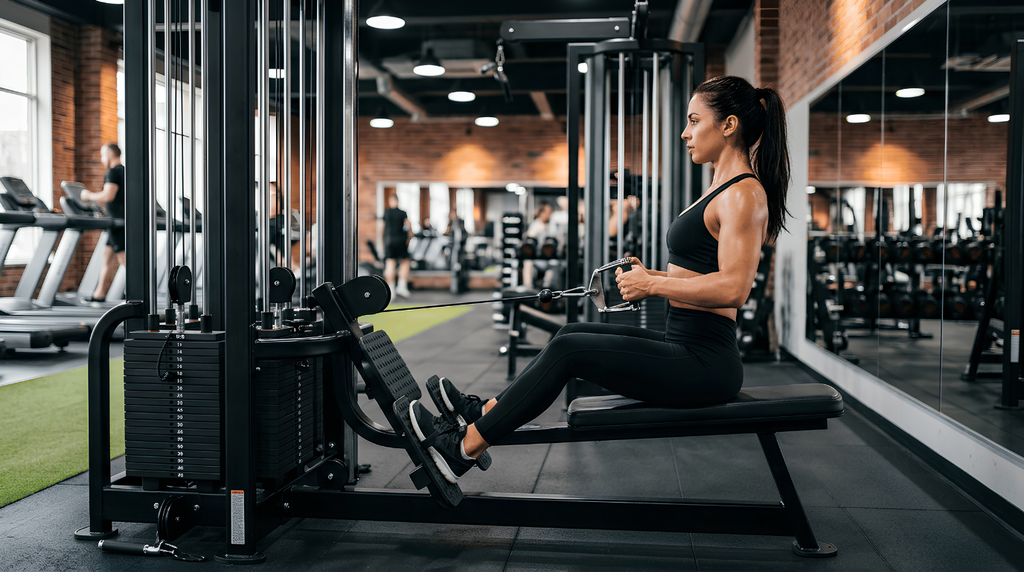
A cable row offers freedom of movement, while a machine with a fixed path guides the motion for you. A chest pad on a seated row machine also takes the lower back out of the equation, so more of your effort goes into the pull. Cable versions ask more of the trunk, which helps if you want that and hurts if your lower back usually tires first.
Size and price matter if you are buying. One professional chest supported model from SKOR measures about 2.1 by 1.7 meters and weighs 243 kilograms, and a UK retailer lists a plate loaded chest supported unit at 1,500 pounds with a 350 kilogram maximum load. Those are commercial examples and listings change, so check current ones. In a small space, a cable attachment may be more realistic than any full size seated row machine.
Form Details That Matter Most
Start with seat height. The handles should sit near chest level, and the pad should let you reach them without rounding your shoulders. Mayo Clinic’s guidance adds that you should feel only a mild stretch in the starting position, which keeps the shoulders from rolling forward before the pull begins.
Drive the elbows back and squeeze the shoulder blades together instead of yanking with your hands. If you find yourself leaning back to finish reps, the load is probably beyond what your back can handle on a seated row machine. NASM names incomplete range of motion as a common fault because it limits back activation, so pause briefly at the end of each rep and return slowly. On multiple reps, avoid fully resting the weight on the stack so tension is kept on the muscles.
A quick self check: film one set from the side. If your torso moves more than your elbows do, lower the weight.
Common Questions
How many sets and reps should I do?
Eight to twelve reps per set is a common range for machine rows within a back or upper body session. Three sets on a seated row machine is a sensible starting point, and stopping when form slips is better than stopping when the stack runs out.
Is it suitable for beginners?
Generally yes. The guided path and back support make the pulling pattern easier to learn than a barbell row. Start light on any seated row machine and learn the shoulder blade squeeze before adding load.
Where should I pull the handles?
Some sources suggest pulling toward the lower abdomen for balanced work and higher for more upper back emphasis, which fits the elbow angle findings above. Experiment with small changes on the seated row machine and notice what you feel.
Adjust one variable at a time, either elbow position or grip, and note how the movement feels and what your numbers do over a few weeks. That feedback will tell you more about your technique on the seated row machine than any rule can.