Most people buy a neck harness for one of two reasons. Either they play a contact sport and have heard that a stronger neck protects the head, or they want a sturdier neck and are tired of skipping it in the gym. Both goals are reasonable. The first, though, rests on evidence more modest than product pages suggest, and the second carries injury risks that rarely get mentioned. This is a practical look at what the research supports, what the equipment actually does, and how to start without hurting yourself.
What the research does and does not show
Researchers at the University of Michigan found that people with stronger necks had smaller head acceleration responses when standardized forces were applied in the lab. That matters because bigger head accelerations are linked to higher concussion risk. A Rutgers review in the Journal of Orthopaedic and Sports Physical Therapy recommended neck strengthening for athletes in higher risk sports and noted that women typically have less neck strength and a greater concussion risk.
Field data is more cautious. An analysis of 6,704 student-athletes associated each added pound of neck strength with about a 5 percent drop in the odds of concussion, yet a later systematic review found only a small effect size and called for more study before lab head motion can be translated into fewer real concussions. The lead researcher on the 6,704 athlete work was careful too, saying that even the strongest neck cannot guarantee protection.
Association is also not proof. Athletes with stronger necks may be fitter, better coached or quicker to brace for contact. That last point is worth sitting with. The same review noted that short-latency anticipatory strength, meaning the neck tensing just before impact, reduces head motion. A slow, heavy set of neck extensions does not necessarily train that reflex. Pairing strength work with bracing practice under a coach is a sensible idea, though it deserves better evidence than exists today. None of this argues against owning a neck harness. It argues against treating one as insurance.
What a neck harness really trains
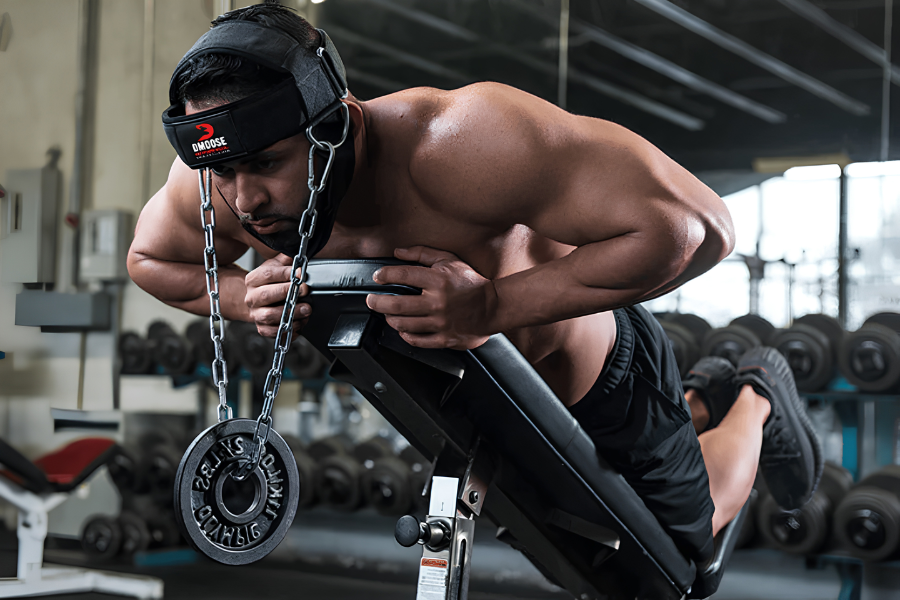
A neck harness hangs weight from the head through a padded strap and a chain, so the neck works against gravity. Typical exercises include flexion, extension and side flexion. Extension, the looking up movement, is where most people feel it first, and one fighting gear review site calls loading that movement the easiest, most effective job for a harness.
Rotation is the gap. In the rugby study of 32 adolescent males, both conventional and rotation-added programs raised strength, but the authors concluded that conventional work does not maximize rotational adaptations. A plain neck harness with a plate is poor at rotation, so bands, manual resistance or dedicated devices fill that role. One review site rated the Iron Neck Alpha Plus the most versatile option, though that is one site’s opinion, not a test result.
Think of the options as tools with different jobs. A neck harness is best for steady, progressive loading in small steps. Bands are portable and gentler. A training partner or your own hands give resistance you can adjust instantly, which helps while you are still learning control.
Choosing one: fit, chain length and honest reviews
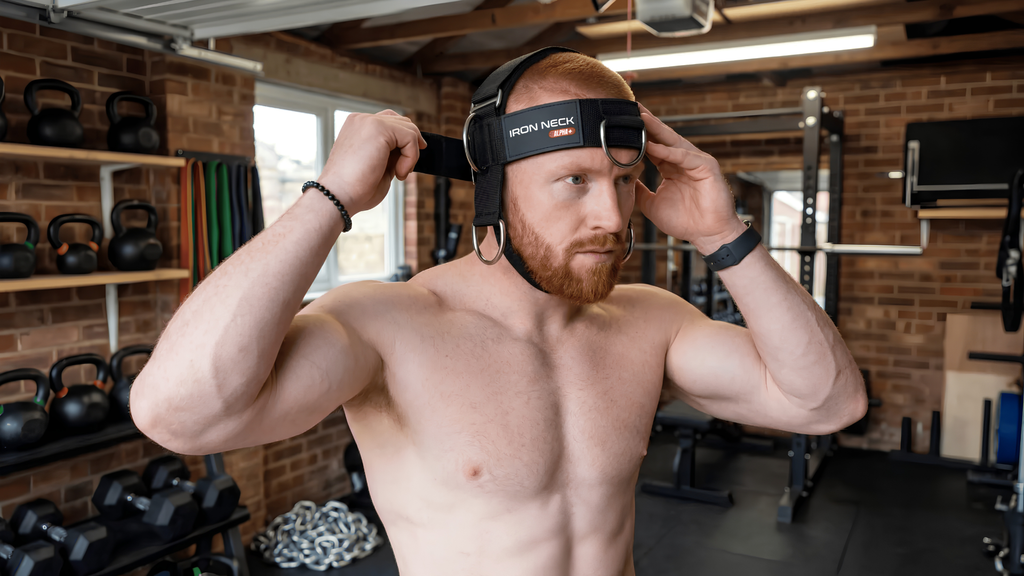
Fit decides whether you will actually use it. The strap should sit across the skull and not press on the ears or face. Try it on, move your head through its full range without weight, and check that it does not slip. Chain length matters more than people expect. If it is too short, the plate hits your knees or the bench. If it is too long, the plate swings. Think about whether you will train seated or lying before you buy a neck harness.
Capacity figures are mostly irrelevant. Some listings advertise 300 pounds per hook, but nobody should come near loads like that on a neck. A neck harness that is comfortable and well stitched beats one with an impressive rating.
Be a little skeptical of best neck harness lists. Many are published by retailers or affiliate sites, and prices change often, so check current prices and read independent user reviews first.
A careful way to begin
Your first sessions with a neck harness should feel almost too easy. Warm up the neck and upper back, begin with no added weight, and learn the pattern slowly, taking two or three seconds to lower the head and returning with control. When you strap in, keep the plate on the floor until the strap is secure, as an exercise guide on Bodybuilding.com advises, and never let it swing or jerk. Stop well short of pain.
Add load in very small steps. Neck muscles are small, and big jumps are how people strain them. Lighter weight with higher repetitions is a common approach, and two or three short sessions a week are typical, but these are general coaching conventions, not findings from the studies above. A qualified coach or physiotherapist can tailor them. Skip weighted work when your neck is already sore.
Some people should get checked first. If you have a past neck injury, numbness, tingling or frequent headaches, see a clinician before using a neck harness. The same goes for teenagers. The rugby study used a structured program with blinded assessors, so a young athlete should train under qualified supervision rather than alone with a neck harness bought online.
A neck harness is a modest tool that rewards patience. Loaded sensibly, it builds neck strength and confidence. In a contact sport it should be one part of the plan, not the whole plan.