Stand on one leg on a bare floor and you will probably feel fine. Try it on a dome of air and your ankle starts arguing within seconds. That small annoyance is the whole idea behind the BOSU Balance Trainer, a rubber half sphere on a flat platform that David Weck invented in 1999.
It has had plenty of research attention this year. A randomized trial published in May 2026 compared Bosu ball and Swiss ball core training in college students with mechanical low back pain, and an August 2026 paper in Frontiers in Physiology tested unstable surface training in ballet dancers. This guide covers what that research does and does not show, how to pick a model, and how to start without making your first session your last.
What you are actually standing on
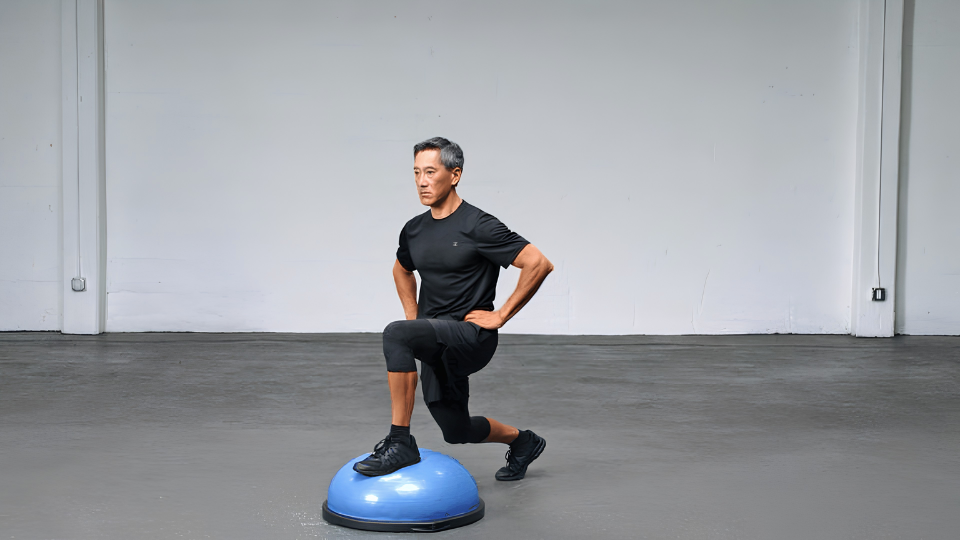
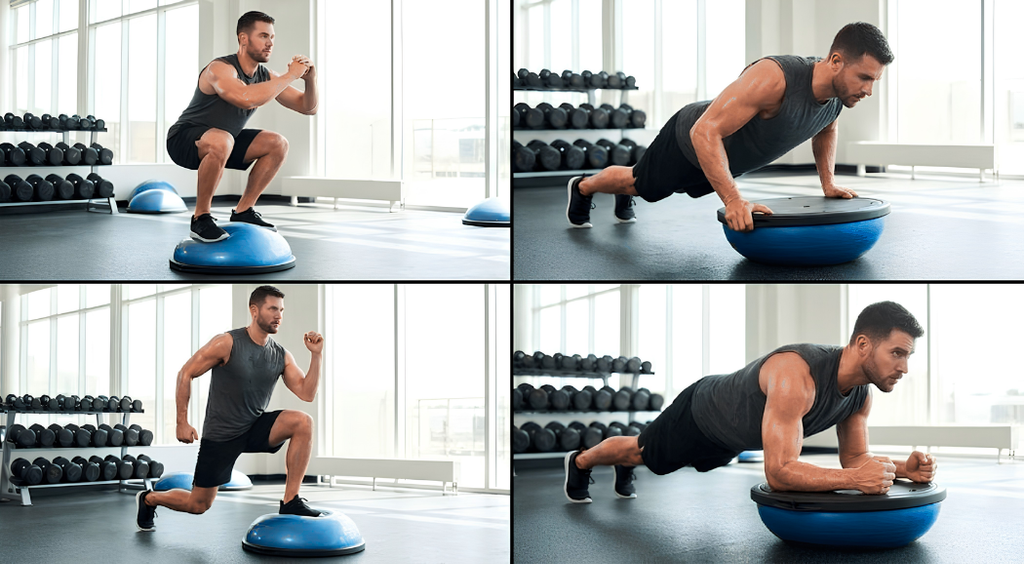
Dome up, you stand on the rubber and your muscles keep correcting small tilts. Flat side up, the platform wobbles under your hands or feet, which is how people use it for push-ups. The name began as an acronym for Both Sides Utilized, though some sellers write Both Sides Up. Because the platform itself stays rigid, the device suits everyone from older or injured users to elite athletes, so the BOSU Balance Trainer is less of a niche gadget than it looks.
What the research says, and what it does not
In the May trial, both the Bosu and Swiss ball programs improved pain, disability, core strength and muscle activation, and the Bosu group did slightly better on muscle activation and flexibility. Slightly is the key word. The participants were young college students with one specific condition, so this is not proof that either tool is better for everyone.
Smaller lab studies are more specific. In fifteen active adults, the soleus, a calf muscle, worked hardest during single leg stance and single leg squats on a BOSU, while the peroneus longus on the outer shin peaked during forward lunges. The authors suggested moving ankle exercises from flat ground to the BOSU as a progression. A plank study found upper abdominal activation about 10 percent higher with a Bosu ball than on the floor, and about 5 percent higher in the lower portion.
Results are not unanimous. Some squat research found no significant difference in muscle activation between a stable surface and a BOSU for certain leg muscles. The sensible reading is that the BOSU Balance Trainer challenges balance and joint control. It is not a replacement for loaded strength work, since wobbly footing limits how much weight you can control.
The Frontiers paper is worth knowing about for its design more than its numbers. It asked whether adding unstable surface balance training to resistance training beats doing the same work on solid floor, with lunges on a BOSU ball progressing to five kilogram dumbbells. That mirrors how most people actually use these tools, as an add-on to strength training.
BOSU Balance Trainer, Swiss ball or plain floor?
It depends on what you are training. The floor is the right place for heavy squats and deadlifts. A Swiss ball is big and rolls, which suits some core work. A BOSU gives you a fixed base with an unstable top, which is why it works well for single leg drills and push-up variations. Since the May trial found both BOSU and Swiss ball programs helped, space and personal preference are fair tiebreakers. If your living room is small, a 20 inch Sport size BOSU Balance Trainer is the sensible pick, since its compact design is meant for easy storage.
Choosing a model without overpaying
BOSU’s own site listed the K Series at $129.99, the Home at $144.99, the NexGen Home at $169.99 and the Pro at $189.99, while Academy listed the Sport at $109.99. Prices change, so confirm before buying. The Pro is built for commercial use, measures 65 cm across, weighs 7 kg and is rated to 159 kg. The Youth/Sport version is 20 inches wide and rated to 250 pounds, although one retailer lists 300 pounds, so check the label on the unit you buy.
For one or two people at home, the Home version of the BOSU Balance Trainer covers most needs. The Pro makes more sense for studios or shared use, where the over-molded non-slip base is designed for daily gym wear. Before you buy any BOSU Balance Trainer, check whether a pump is included (Academy lists a hand pump in the box), measure where it will live, and read the warranty, which BOSU lists as one year limited on the Pro.
A first month that is easy on your ankles
Start dome up beside a kitchen counter so you can grab it. Week one is just standing: thirty seconds on two feet, then on each leg. A hard wobble is normal feedback, not failure. In week two add slow bodyweight squats with feet shoulder width apart. In week three try forward lunges stepping onto the dome, the movement that lit up the outer shin in the ankle study. By week four, flip it and try incline push-ups with your hands on the platform.
Keep sessions on the BOSU Balance Trainer short, two or three a week. If you run or play racquet sports, ten minutes of holds and lunges after a warm up fits better than replacing your normal training. If you have had a recent ankle, knee or back injury, check with a physical therapist first.
Quick questions
Is it good for beginners?
Yes, with care. A comparison of several unstable devices found that the BOSU trainer created the most unstable environment, so begin with two foot holds and keep something solid within reach. nature
Is it safe for older adults?
It is used by older and injured people, but start with support nearby and get professional advice if you have a history of falls.
Dome up or flat side up?
Dome up first for balance work and squats. Use the flat side up for push-ups once your balance is steady.
The best BOSU Balance Trainer is the one you will actually stand on twice a week, so choose on space and budget before anything else.