Most people meet a trigger point massage ball the same way. There’s a stubborn spot under the shoulder blade or deep in the glute that stretching never reaches. Someone suggests pressing a tennis ball into it against a wall, and it works well enough that they wonder if a better tool exists. It does, but the choice of ball matters less than how you use it. This guide covers what the research supports, how to match a ball to a body part, and a routine you can try tonight.
What a Trigger Point Massage Ball Can and Can’t Do
Researchers describe a trigger point as a hyperirritable spot within a taut band of muscle, usually in overloaded tissue. A trigger point massage ball borrows from a hands-on technique called ischemic compression, which is steady pressure held long enough for the spot to settle. Clinical guidance suggests holding that pressure for somewhere between 30 and 90 seconds.
The realistic benefits are modest and mostly short term. Reviews of self-myofascial release, the umbrella term for foam rolling and ball work, report acute gains in flexibility and range of motion and less delayed soreness, without hurting strength or power. A review of programs lasting four weeks or more found improved joint range of motion and dynamic balance, while effects on strength were inconsistent. The authors of another review point out that studies apply the method in very different ways, so nobody can yet name an ideal dose.
Two things the evidence does not show. It does not show that this kind of self-treatment cures chronic conditions or replaces physical therapy. And the claim on many product pages that these tools break up adhesions describes a mechanism, whereas the studies above measured range of motion and soreness. Think of the ball as a way to feel looser, not as a repair tool.
Matching the Ball to the Body Part
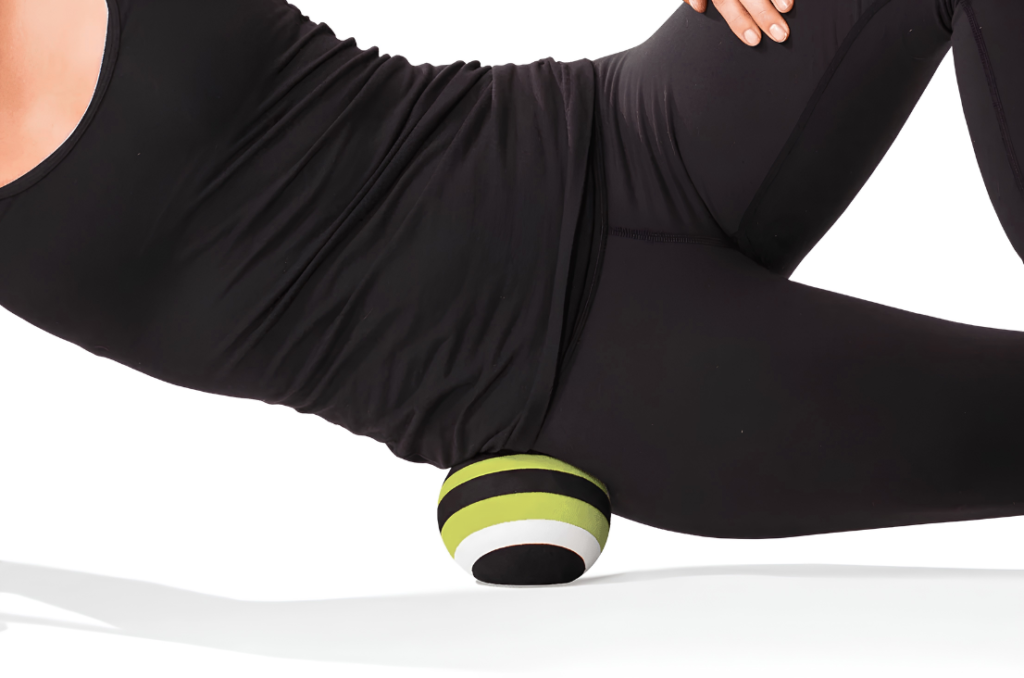
Size comes first. TriggerPoint describes its 2.6 inch ball as suited to the feet, hands, hips and glutes, and its 5 inch ball as suited to the back and legs. A trigger point massage ball at the smaller end digs in more precisely. A larger one spreads the pressure over more area, so it usually feels gentler.
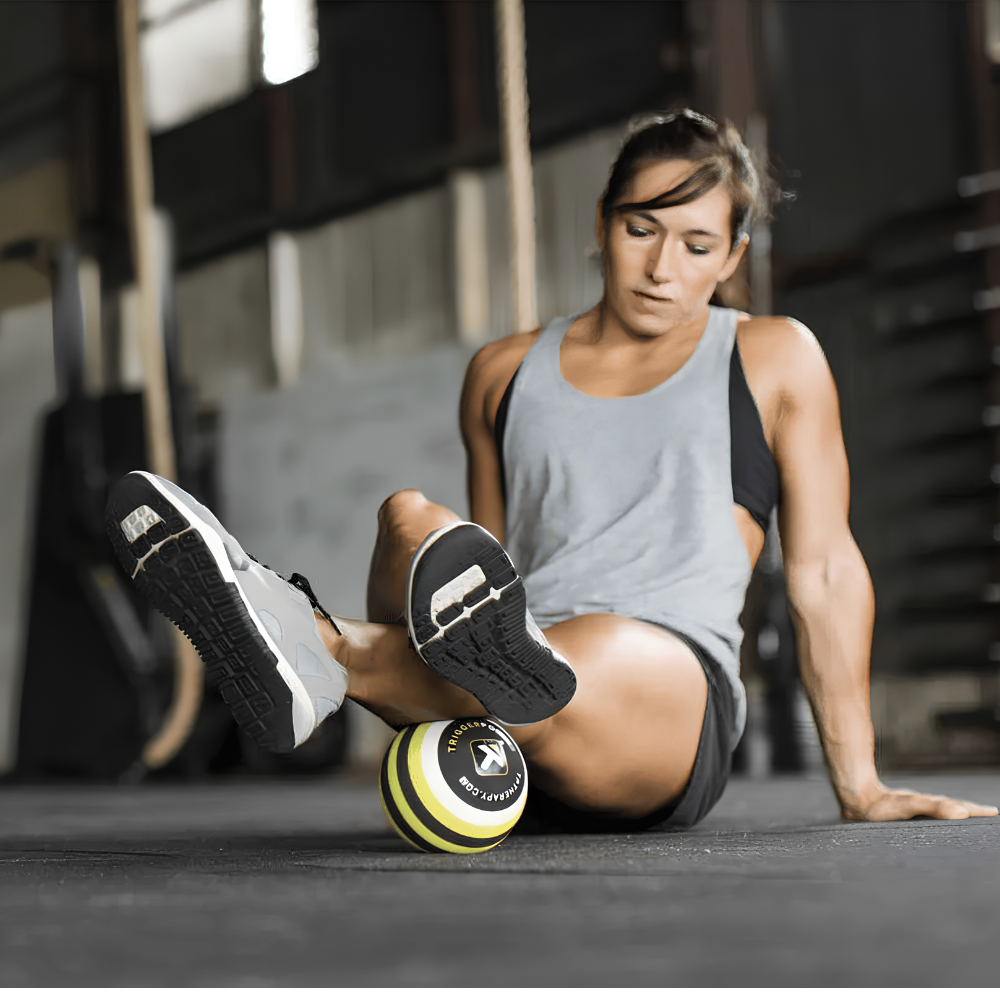
Firmness comes next. A tennis ball compresses easily, so pressure stays light, while cork and lacrosse style balls are much firmer. Two practical examples. If you sit at a desk and the muscle between your spine and shoulder blade aches, start with a tennis ball against the wall. For a tight foot arch, a small ball under a seated foot lets you control exactly how much weight goes through it.
A ball isn’t a substitute for a foam roller either. A roller covers big muscle groups like the thighs quickly, while a trigger point massage ball reaches places a roller can’t, such as the arch, the back of the shoulder or the deep glute. TriggerPoint lists its small foam ball at $19.99, its large one at $34.99, and a suction mounted version at $28.99, though prices change, so check before buying.
A Simple Routine for Tight Spots
Use a wall for the shoulders and upper back, and the floor for glutes and hips. Roll slowly until you find a tender spot, then stop moving. Lean in until the pressure is clearly uncomfortable but still tolerable. One clinical protocol used a 5 to 7 out of 10 pain level, held for about 60 seconds. Breathe out slowly and wait for the tenderness to fade, then ease off. If nothing changes after 90 seconds, move on to another spot.
Once a spot softens, add movement. A small study found that using a massage ball during a cross-body shoulder stretch improved shoulder rotation and cross-body range of motion. To try it, pin the ball behind your shoulder against a wall, then slowly bring that arm across your chest.
For frequency, trials of manual trigger point work have used about three sessions per week, which is a sensible starting point with a trigger point massage ball too. If a spot is bruised or sore the next day, you pressed too hard or stayed too long. Keep the ball off bone, the spine and the front of the neck, and stay away from numb or tingling areas. Sharp, shooting pain, or pain that lingers for weeks, deserves a clinician rather than more rolling.
Common Questions
How long should I stay on one spot?
Start with about 30 seconds and build toward 90 only if it feels productive. Pressure that makes you hold your breath is too much.
Tennis ball or lacrosse ball?
Use a tennis ball for sensitive areas and for your first few weeks. Move to a lacrosse ball when you need firmer pressure for the deep glute or hip. Both work as a trigger point massage ball, so pick the one you can relax on.
Who should check with a doctor first?
Anyone with a circulation problem, nerve condition, bone density concern or fresh injury, and anyone taking blood thinners, should ask a clinician before using a trigger point massage ball.
If you’re unsure where to begin, pick one trigger point massage ball, use it on your single tightest area for two weeks, and notice whether your range of motion or soreness changes.