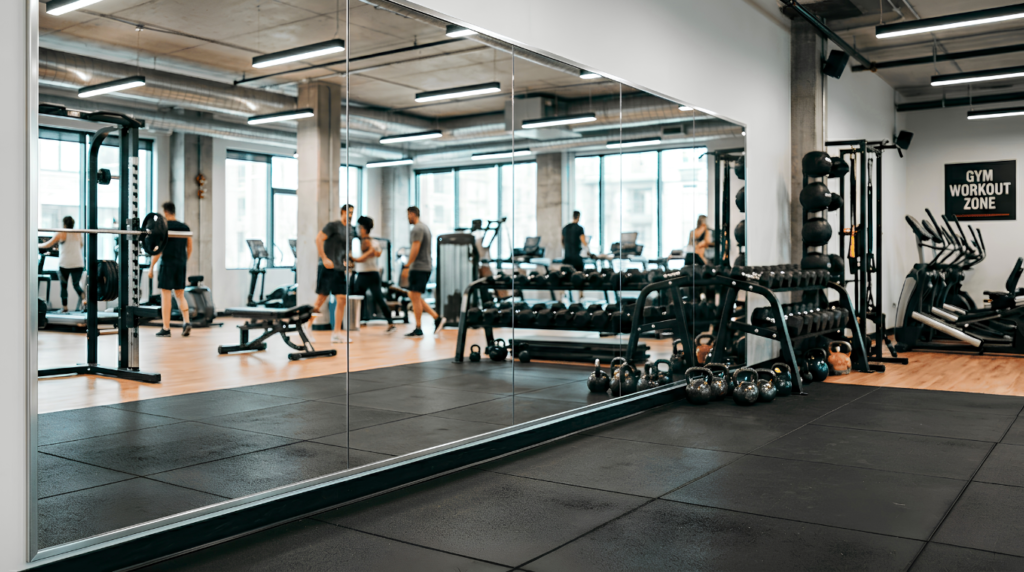
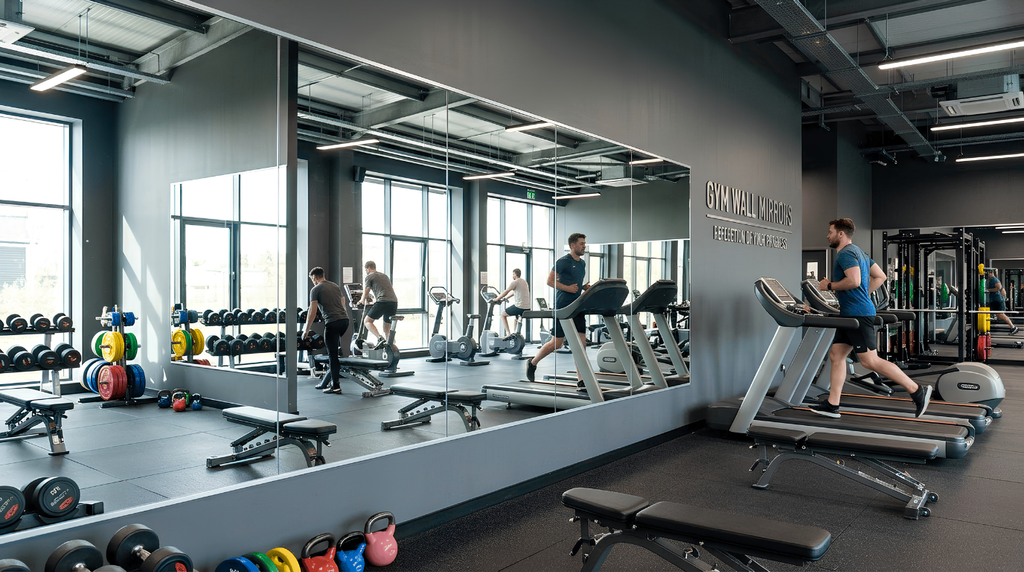
A mirror changes how you train. A rounded upper back on deadlifts, a knee drifting inward on squats, a bar sitting slightly crooked on the press: these are easy to see and hard to feel. That is the real case for a gym wall mirror, and it is also why a bad one is so annoying. A warped reflection or a panel hanging loose defeats the whole purpose.
Whether this is your first gym wall mirror or a replacement for one that disappointed you, the decisions that matter are the same: material, size, mounting and placement. Everything below is something you can check yourself in a garage, basement or spare room.
Glass or Acrylic: Which Material Fits Your Gym
Tempered glass is the usual recommendation for lifting spaces because it is designed to break into small, blunt pieces rather than long sharp shards. Many panels also have a safety backing film that holds fragments together if the glass cracks. Treat both as features to confirm on the product page, not things to assume.
Acrylic is lighter and does not shatter, which suits a rented room or a wall near children. The trade-off is optical. Acrylic can show slight waviness and scratches more easily than glass. If checking your form is the main reason you are buying, look at the reflection before committing. For most lifters a tempered glass gym wall mirror is the better pick, and acrylic makes sense when weight, renting or kids matter more than image quality.
Sizing a Gym Wall Mirror for the Way You Train
Common sets use 48 by 24 inch panels, sold as two or three. The arithmetic is worth doing before you buy. Three panels laid side by side give about 12 feet of width, enough to cover a rack and a bench, but only 24 inches of height. A standing adult is much taller than that, so one row shows a slice of you rather than all of you. A gym wall mirror made from a single low row works well for floor work and seated movements, and poorly for standing lifts. If you want your whole body in view, stack two rows or choose taller panels.
Before you order any gym wall mirror, outline the planned area on the wall with painter’s tape. Then stand where you actually train and check that your shoulders, hips and knees stay in view through the whole movement. This takes ten minutes and prevents the most common sizing mistake. Also remember that tempered glass cannot be cut after it is made, so measure twice and order once.
Mounting: Do Not Improvise This Part
Weight is what buyers underestimate. Large glass panels can be heavy enough that lifting one alone puts both you and the glass at risk, so check the weight in the listing and line up a helper. Most sets use J-bar or Z-bar brackets, which support the bottom edge and spread the load along the glass. Adhesive alone is not a sound plan for heavy panels. How you hang a gym wall mirror matters more than which one you buy.
Find the studs instead of trusting drywall. In many wood-framed homes they sit about 16 inches apart, though this varies, so confirm with a stud finder. On masonry or concrete, use anchors rated for the load, and if you are unsure, a local glazier can do the job properly. A gym wall mirror also exposes every bump in the wall behind it, so hold a long level or straightedge against the surface first. If the wall is visibly uneven, fix that before the glass goes up, because the reflection will show it.
Placement: Keeping the Glass Out of the Way
Picture a one-car garage with the rack against the back wall. The obvious spot for the mirror is right behind the lifter, but that is also where a rolling plate or a dropped bar ends up. A gym wall mirror directly behind a deadlift platform is asking for trouble. A side wall, or the wall you face from a few feet back, keeps the glass out of the bar path.
Keep plate storage and dumbbell racks away from the lower edge. Also pay attention to light. A window directly opposite can throw glare and make your reflection hard to read, so stand where you train and look at the planned spot at different times of day before you drill anything.
What to Check Before You Order
A good product page states the glass type, thickness, edge finish, backing film, included hardware and panel weight. Listings often show 4 to 5 mm tempered glass, but thickness alone does not make a mirror safe. Mounting and placement do much of that work. Read reviews for reports of damage on delivery, since large glass shipments are worth scrutinizing.
Many buying guides online link straight to retailers, so cross-check their claims against the manufacturer’s specifications. A local glass shop can cut custom sizes and install, which may cost more but removes the handling risk. When comparing quotes, ask whether a gym wall mirror order includes safety backing and mounting hardware.
Common Questions
Can I hang one on drywall alone?
Not for heavy glass. Mount into studs or use anchors rated for the weight, and follow the manufacturer’s instructions. Lighter acrylic tiles have their own requirements, so read their guidance.
Will a mirror improve my technique?
It helps you spot position errors, but it cannot tell you what correct form looks like. Pair it with coaching or reliable form guides. A gym wall mirror is a feedback tool, not a coach.
Can renters use one?
Acrylic tiles are the usual choice. Check your lease and how any hardware or adhesive affects the wall before buying a gym wall mirror.