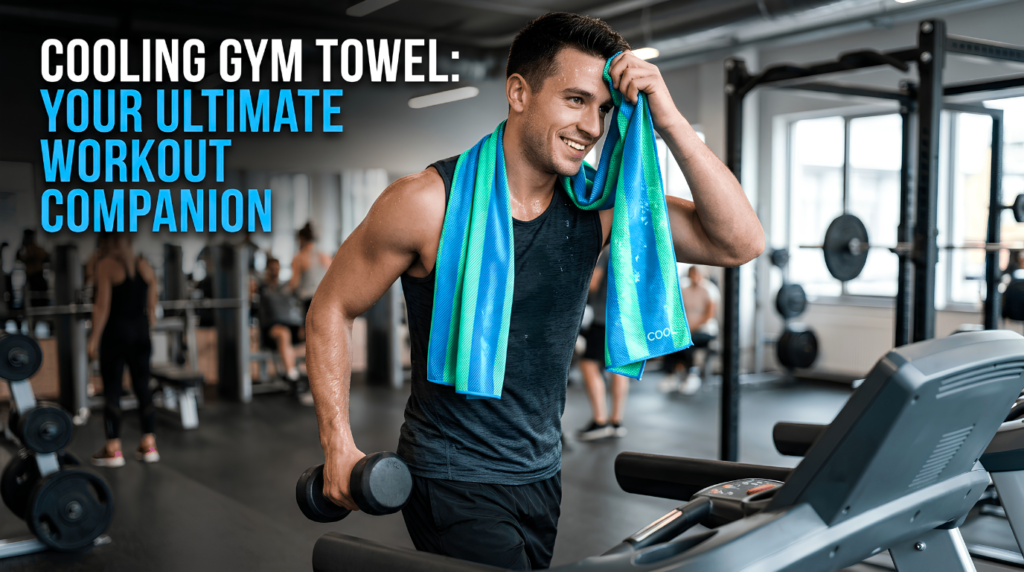
Most people discover the cooling gym towel the same way. Someone at the next bench drapes a thin, damp strip of fabric over their neck, looks a lot less miserable than everyone else, and you start wondering whether it is real or just clever packaging.
It is real, with limits. A cooling gym towel works by evaporation, and evaporation depends on the air around you as much as on the fabric. That is why this year’s tests do not agree on one best pick, and why the right choice depends on how and where you train.
Why a damp towel feels cold
When water evaporates it takes heat with it. A wet towel pulls that heat from the fabric and from the skin underneath, which is why the chill is strongest right after you wring and snap it. Snapping moves water toward the surface where it can evaporate. Cold tap water gives a brief extra jolt, but the lasting effect comes from evaporation, not from the starting temperature.
Two things limit it. Humidity is the first. The more moisture the air already holds, the slower the towel dries and the less cooling you feel. Product guides often place the trouble zone somewhere above 70 percent humidity, although the exact figure varies by source. Airflow is the second. A towel pressed tight under a collar gets little air, so drape it loosely and let a fan or your own movement help.
Many guides recommend wearing it on the back of the neck because large blood vessels run close to the skin there. That is a reasonable comfort tip, but it should not be read as a proven medical benefit.
PVA or microfiber matters more than the brand
Almost every cooling gym towel on the market is made from one of two fabrics.
PVA, short for polyvinyl alcohol, is the sponge-like material found in many classic chilled towels. It holds a lot of water and gives it up slowly, so it tends to stay cool the longest. The downsides are practical. PVA dries stiff, needs a quick soak before you can fold it, and several makers recommend washing it by hand.
Microfiber is usually a polyester blend. It holds less water, so a soak does not last as long, but it feels soft on the face, packs flat in a bag and is generally safe in the washing machine. It also starts cooling quickly, which suits short bursts of effort.
You will see claims of two to four hours of cooling per soak. Treat those as best case figures from comfortable conditions. In a warm room during a hard session, expect to wet the towel again much sooner.
What the 2026 tests found
CNN Underscored tested 11 towels and named the Mission Original Instant Cooling Towel best for immediate cooling, describing it as lightweight, breathable and easy to pack in a gym bag. TODAY’s Jannely Espinal tested seven over three weeks and picked the Sukeen four pack as best overall, citing its breathability and slow drying time. Forbes Vetted chose the South Sport Cool Rag Extreme as its overall winner and called the Ergodyne Chill-Its 6602 its budget pick, listing it at under 20 dollars with up to four hours of cooling per soak.
Three outlets, three different winners. The gap is not a sign that anyone got it wrong. Testers weigh different things, such as how fast the chill arrives, how long the fabric stays damp and what each towel costs. None of these lists was written only about the gym, so read them as general tests and apply the results to your own routine. If you are choosing a cooling gym towel for training, the question that matters most is how long it stays useful in a warm room while you are actually sweating.
Price is worth a quick calculation. At the time of TODAY’s review the Sukeen set cost 13.99 dollars for four, which is about 3.50 dollars per towel, while CNN’s review listed the Mission Original at around 13 dollars for one. That difference matters if you want a spare cooling gym towel for the car, or one for a training partner. Prices move often, so check current listings.
Matching a cooling gym towel to your workout
Lifting
Rest periods are where a cooling gym towel earns its keep. You are barely moving, you are still hot, and the towel can sit on your neck until the next set. A longer, narrow cut is easy to drape and tuck in.
Treadmill and cycling
Sweat gets everywhere during steady cardio, and a loose neck wrap tends to slip. Tuck the ends into your collar or clip it, and wet it again between intervals rather than waiting until it feels warm.
Hot yoga and crowded classes
Steamy rooms slow evaporation, so a cooling gym towel will do less here than anywhere else on this list. If the room is very humid, a plain dry towel for sweat may be the more useful thing in your bag. That is a limit of the product, not a flaw in any one brand.
Outdoor sessions
For long runs or sports in summer heat, a PVA cooling gym towel gives you a bigger water reserve. Just plan for the stiffness once it dries.
Using it and looking after it
Using a cooling gym towel properly takes very little effort. Soak it until it is fully wet, wring it until it stops dripping, snap it a few times to spread the water, then drape it loosely. When the chill fades, snap it again before you go back to the tap, since that alone often brings some cooling back.
Care depends on the fabric, so follow the label on your cooling gym towel first. Many makers suggest skipping fabric softener on microfiber because it can coat the fibers, and washing PVA by hand. Let the towel dry fully before sealing it in a pouch, because a damp towel shut away for days will turn musty.
Cooling towels also do not replace a dry towel. A cooling gym towel is meant to stay damp, so most people end up carrying one for wiping sweat and equipment and another for cooling.
Comfort, not medical protection
Even the best cooling gym towel only makes training feel more comfortable. It does not replace drinking water, resting, or stopping when your body tells you to. Dizziness, nausea, confusion or a pounding headache during exercise in heat are reasons to stop, move somewhere cool and get medical help if symptoms do not ease.
Questions people ask before buying
Can I put it in the freezer?
Check the care label first, since instructions vary. A shopper on one retail listing said they chill the wet towel in the freezer for a few minutes for a stronger start. Letting a soaked towel freeze solid is a different matter, and some guides warn it can damage PVA fibers, so a short chill is the safer approach.
Is a cheap multipack good enough?
It can be. The Sukeen four pack won TODAY’s overall pick, so a low price does not automatically mean poor performance. Quality does vary across the many near identical listings online, so favor products with plenty of recent reviews and a clear return policy.
How often should I wash it?
Rinse it after sweaty sessions and wash it when it smells or starts to feel slick. Sweat, sunscreen and dirt can clog the fabric and reduce how much water it holds.