If you sit at a desk most of the day, you probably know the tight band across the upper back that ordinary stretches never seem to reach. A padded ring called a yoga wheel is often bought to deal with exactly that, which is why it has moved from studios into living rooms. It can help, but not everyone, and how you start matters more than which brand you buy.
What a Yoga Wheel Actually Does
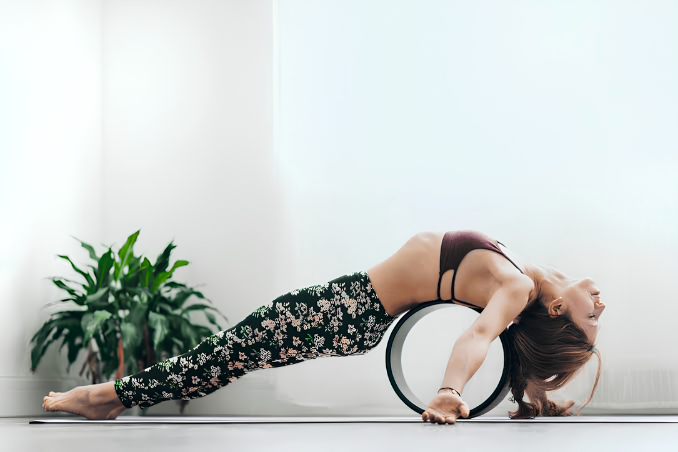
A standard yoga wheel is about 12 to 13 inches across and is usually made of rigid plastic with a foam layer. Lying back over it puts your spine into gentle extension, the opposite of the slouch that desk work builds. The curve acts like a firm, rounded hand under the ribs, so the effect is mostly in the mid back, where the ribs and spine are meant to move together.
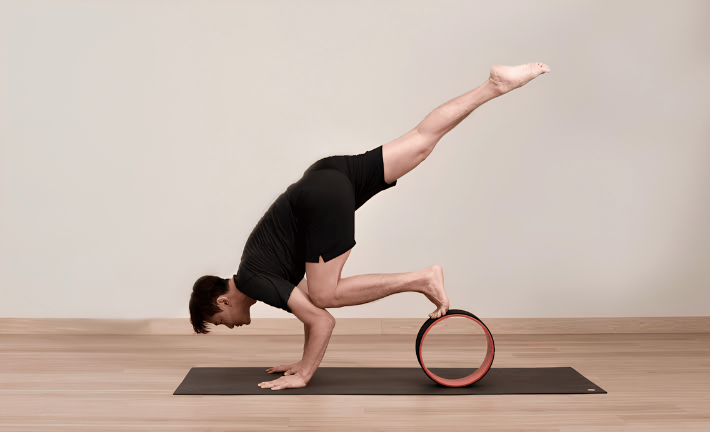
Teachers also use the yoga wheel as a support instead of a roller. Resting a front heel on it in half splits, for instance, takes some load off the knees. Its popularity is often traced to Sri Dharma Mittra in the late 1970s, but that comes from secondary sources, so check it before you repeat it.
Will It Ease Your Back Pain?
It depends on where the pain sits. One 2026 buying guide says a yoga wheel suits thoracic stiffness and upper back tightness best, especially in people who sit for long hours, and that fits the anatomy. The upper back tends to stiffen in people who sit all day, while the lower back already bends easily and rarely needs more extension.
Picture someone who works at a laptop for eight hours and feels tightness between the shoulder blades by mid afternoon, with no history of spine problems. A few minutes on the ring after work is a reasonable experiment for that person. Someone whose pain sits low in the back and flares when they arch is a different case, and a physiotherapist visit makes more sense before any equipment.
The wider research is about yoga, not the ring. A systematic review found yoga appears about as effective as other non-pharmacologic treatments for the disability caused by back pain, and the largest trials saw temporary increases in low back pain in roughly 10 to 15 percent of people. I did not find trials comparing a ring with a rolled towel or foam roller, so treat the benefit as plausible rather than proven.
Who Should Be Careful
Extension is exactly what some spines dislike. Lumbar spinal stenosis and spondylolisthesis can worsen with spinal extension exercises, including yoga wheel use. A Vancouver physiotherapist has written about treating young yoga students with lower back pain after deep backbends. If you have a diagnosed spine condition, ask a physiotherapist before you try a yoga wheel.
Stop at once if you feel sharp pain, numbness, tingling, or pain that travels into an arm or leg. Soreness that lasts a day or two usually means you did too much.
A Cautious First Week
Test your tolerance cheaply first. Lie with a firmly rolled towel under the upper back for a few minutes. If that feels good, a yoga wheel is a fair next step. If it feels bad, buying equipment will not fix it.
For the first few days, just sit against the ring for about five minutes. Then place it behind your shoulder blades with feet flat and hands cradling your head, and lean back in small movements. Keep it away from your lower back at first. On hardwood or tile the wheel can slip out from under you, so a high grip mat helps. A folded towel across the center channel softens the pressure if it feels sharp on the spine.
A realistic routine for a desk worker is two or three minutes at the end of the workday, or a short session after exercise when the muscles are warm. Five to ten minutes in total is plenty.
Common Mistakes
Most trouble comes from enthusiasm. People lean back as far as they can on day one, roll quickly over the lower back, or hold their breath through the stretch. Slow, small movements work better because the aim is to find stiff spots, not force them open.
If your ribs flare forward or your lower back arches sharply, the ring is sitting too low or you are going too far. Move it higher and shrink the range. Another slip is using it on a slick floor in socks, which is a fall risk as well as a back risk.
Choosing One, and What to Compare It With
The 13 inch size is standard. A smaller adult may be more comfortable with 10.5 inches, because a wheel that is too big for your frame stops you reaching the floor comfortably. A width of about 5 inches sits well between the shoulder blades, and if balance worries you, a half version is steadier. When shopping for a yoga wheel, check the stated load rating, and pay more attention to firmness and grip than to colour.
A foam roller works differently. It presses and releases muscle, while the ring guides your spine into extension. If your trouble is tight calves after running, a roller serves better. If the problem is a rounded upper back from sitting, the yoga wheel is more targeted. A tennis ball against a wall, or a doorway chest stretch, costs nothing and covers part of the same ground.
Make the Gains Last
Five minutes of stretching does little if you slump for the next eight hours. Pair it with small habits such as walking every hour, raising your screen to eye level, and simple pulling exercises like rows to strengthen the muscles between the shoulder blades. These are general ergonomic and exercise principles, not claims about the ring, and a physiotherapist can tailor them to you.
Used briefly and with respect for pain signals, a yoga wheel is a modest, useful tool, not a fix for everything.