Calves are slow to grow, and most people train them as an afterthought, a few quick sets at the end of leg day on whatever machine is free. The research suggests the choice of exercise matters more than most lifters assume. In a head-to-head comparison, the straight-knee calf raise grew the gastrocnemius, the larger of the two main calf muscles, far more than the bent-knee version. A standing calf raise machine is the most convenient way to load that movement, but it is not the only way, and it can be expensive. This guide covers what the studies found, how far they can be trusted, what the equipment costs, and how to get a good set out of whatever you have. doaj
The Study That Changed How People Train Calves
The most cited work comes from a Japanese research group, published in Frontiers in Physiology in December 2023. Fourteen untrained adults trained one leg standing and the other seated, at 70 percent of their one-rep max. They trained twice a week for three months. The standing leg used a standing calf raise machine, and the seated leg used a separate seated machine. MRI scans showed the lateral gastrocnemius grew 12.4 percent on the standing side versus 1.7 percent seated, and the medial gastrocnemius grew 9.2 percent versus 0.6 percent. The soleus grew about the same either way. frontiersin.org +2
The reason is anatomy. The gastrocnemius crosses both the knee and the ankle, so straightening the knee stretches it and bending the knee leaves it slack. The soleus sits below the knee, so knee position barely changes its workload. The authors concluded that training a muscle at long lengths appears to promote growth.
A second trial points the same way. Thirty resistance-trained participants trained twice weekly for eight weeks, and the straight-leg version beat the bent-knee version for the gastrocnemius, with similar soleus growth. strengthlog
Both studies come with real limits. The first was small and used untrained people, and total calf growth was only about five percent, with no performance testing. A larger percentage gain in one muscle does not mean dramatic visible change in three months. It means the standing position is the better use of your limited calf sets. barbend
Is a Standing Calf Raise Machine Worth Buying?
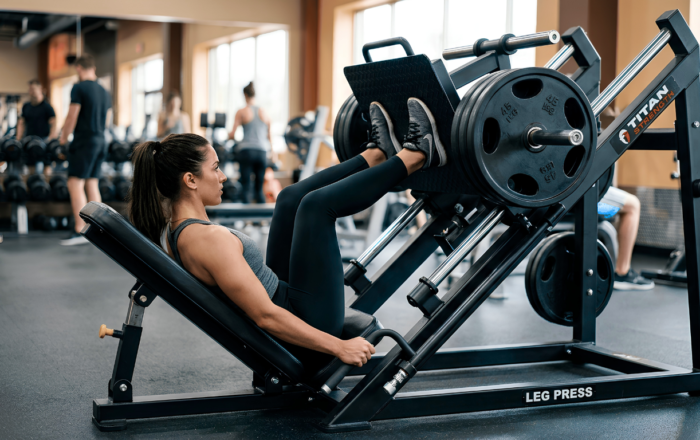
The research tested a position, not a brand. Other trials got gastrocnemius growth using a standing Smith machine calf raise and a horizontal leg press calf raise. What these share is straight knees, a deep stretch, and enough load. nihresearchgate
Prices vary widely, so check current listings before comparing.
- Simple steel calf blocks list for around 40 dollars. walmart
- One selectorized unit lists at 2,995 dollars with a 200 lb stack. biggerfasterstronger
- A remanufactured Cybex Prestige is listed at 3,699 dollars. fitnesssuperstore
- A 120 kg stack model from BLK BOX was listed at 3,600 pounds. blkboxfitness
- The Arsenal Strength M1, with a 400 lb stack, is listed at 7,499 on an Australian retailer’s site. That is probably Australian dollars, so convert before comparing. performaxx
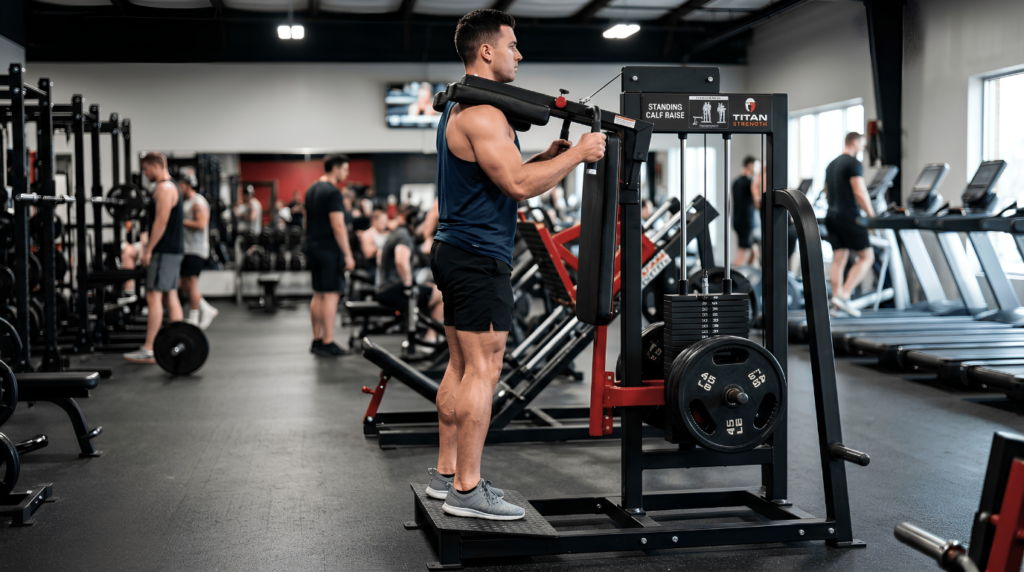
A few practical points should guide the decision. If your gym already has a standing calf raise machine, use it and spend nothing. If you train at home and already own a Smith machine or leg press, you can do straight-knee calf raises on those, and adding a block for extra stretch is a cheap experiment, though that exact combination was not tested in the studies above. A dedicated machine makes the most sense if you train calves heavily several times a week, because stack size eventually caps progress. A 200 lb stack suits many people for a long time, but a strong lifter may outgrow it. Before buying, check that the shoulder pads fit your height, the foot platform lets your heels drop well below the toes, and the frame feels stable under load.
Setting Up and Performing a Set
The setup advice that appears in exercise guides is simple and useful. Set the shoulder pads so you have to do a small squat to get under the weight, and put the balls of your feet on the edge of the platform. That slightly lower start lets you stretch the calves fully. The same guides recommend pausing a moment at the bottom, driving up as high as your ankles allow, and pausing again at the top. musclewiki
On a standing calf raise machine, the most common mistakes are bouncing out of the bottom, bending the knees to cheat the load up, and loading so heavily that the range shrinks to a few inches. These are coaching observations rather than study findings, but they follow from the logic above: the stretched position is where the benefit comes from, so a shortened range gives it away.
Once your normal reps are finished, it may help to keep going with small partial reps in the bottom half of the movement. In a 10-week study of 23 untrained men, adding these past-failure partials raised medial gastrocnemius growth to 9.6 percent versus 6.7 percent for sets stopped at failure. A separate study in young women also found that partial reps at long muscle lengths favored gastrocnemius growth. Both samples were small, so treat this as a promising technique and not a rule. nihresearchgate

Weekly Volume and the Seated Question
How much work do calves need? In a six-week study of 61 untrained young women, 12 weekly sets produced greater muscle thickness gains than six. One workable way to apply that is three sessions a week of four hard sets, or two sessions of six. Build up gradually. A sudden jump in calf volume can leave the Achilles tendon and ankles sore, and sharp or persistent pain there is a reason to stop and see a clinician. strengthlog
Seated calf raises are not useless, but they have a narrower job. Because the soleus grew similarly in both positions, the bent-knee version mainly adds value if you specifically want soleus work. One programming guide suggests splitting weekly sets between the two, with more standing sets than seated. Treat that as an example, since no study has established the ideal ratio. thebarbell
Quick Answers
Are standing calf raises better than seated for bigger calves?
For the gastrocnemius, which makes up most of the visible calf, the evidence favors standing. The soleus responds to both, so seated work is optional.
How long until I see results?
The key study ran three months, and the whole calf grew roughly five percent. Calves are often described as slow to respond to training, and individual results vary, so track measurements or photos monthly instead of judging week to week.
Do I need a dedicated machine at home?
Not necessarily. A block with a Smith machine, or a leg press calf raise, uses the same straight-knee principle. A standing calf raise machine is mainly a convenience and a way to keep loading heavier over time.
The Bottom Line
Straight knees, a deep stretch, controlled reps and steady weekly volume matter more than the specific equipment. A standing calf raise machine makes all of that easy, but plenty of people get the same stimulus without one.